
What's New (for the latest, are you Signed In?)

Oligarchy -

|
|
|

|
|

|
|

|
|

|
|

|

Belated thanks for the many birthday greetings last week.
Obies Abroad -
Obies Abroad
More…Fellow graduates residing outside the US are appearing on two programs presented by the Road to the Future Planning Committee of the Alumni Classes ’67–’72. The second of these two programs will be “Obies Abroad: Views from Africa. Europe, Canada,” at 2 PM EST on Saturday afternoon, November 8.
Three Oberlin College and Conservatory graduates will share their experiences at Oberlin that supported their choice to live abroad, what adjustments to new cultures they needed to make, what perspectives they gained, how they and others in their country view changes occurring now in the US, and of course questions posed by ourselves.
This event should be an enthralling program for all Oberlin Alumni to hear from three of our classmates who have been living abroad. All are welcome to attend!
Here are the bios for the speakers.
 Dr. Groesbeck P. Parham ('70, Sociology/Anthropology), Lusaka, Zambia
Dr. Parham is a gynecologic oncologist whose career has been devoted to transforming women’s cancer care in underserved regions across the globe. He earned his his M.D. and residency training in Obstetrics & Gynecology from the University of Alabama at Birmingham, and completed a fellowship in Gynecologic Oncology at the University of California, Irvine. He has held major leadership roles, including Director of Gynecologic Oncology at Charles R. Drew University of Medicine and Science in Los Angeles and at the University of Arkansas for Medical Sciences. While in Los Angeles, he established Southern California’s first cervical cancer screening clinic for women living with HIV.
► In 2005, Dr. Parham relocated to Lusaka, Zambia, where he pioneered a groundbreaking cervical cancer prevention model enabling nurses to screen women using household vinegar and mobile phone technology. More than two million women in Zambia have been screened through this approach, now widely adopted across Africa. He has also strengthened cancer surgery services on the continent by creating high-volume surgical training camps for African gynecologists. His research spans partnerships with traditional leaders to dispel cancer myths, use of artificial intelligence to improve cervical cancer screening accuracy, and virtual-reality surgical training. Dr. Parham recently served as Senior Clinical Expert for Cervical Cancer Elimination at the World Health Organization, where he helped develop the WHO Global Strategy to Eliminate Cervical Cancer—the first global strategy to eliminate a cancer. He has received numerous humanitarian awards and honorary degrees, including the Doctor of Science and Humanities from Oberlin College (2014).
 Noelle (Hirschboeck) Turner (’73, BM Voice Performance), Essen, Germany
Noelle received her M.M. in Voice Performance at Indiana University School of Music in Bloomington, Indiana. Following a season singing major roles with the National Opera in Raleigh, N.C. she was awarded a scholarship from the Rotary Foundation for a year’s study at the Opera School in Cologne, Germany. Upon completion she embarked on a singing career, specializing in Contemporary music. During her singing career she developed a strong interest in the vocal training of Musical Theatre performers, a genre new to the German theatre system. Noelle taught at the first state-funded academy for Musical Theatre in Munich and was the first Professor of Musical Theare Voice in Germany. She dedicated her work to the development of Musical Theatre since its inception in the mid-80’s, serving as vocal coach for such productions as Cats, Phantom of the Opera, We Will Rock You, Grease and Starlight Express, to name a few. Noelle has lectured and conducted Master Classes on Vocal Technique in Germany, Austria, the Netherlands, Switzerland, France, the Czech Republic and Israel and ejudicates in National and International Singing Competitions.
► From 1992-2000 Noelle was Professor of Voice in the Department of Musical Theater at the Folkwang University of the Arts in Essen, Germany. She also taught seminars in Vocal Pedagogy and was Associate Dean of the university. Since retiring from her university position Noelle has maintained a voice studio in Essen, working with professional opera singers and Musical Theatre performers. She continues to be active in the education of vocal teachers, giving seminars and workshops in and around Germany. www.noelle-turner.de
 Tim Hurson (’67, AB English), Toronto, Canada
The former president of Oberlin's Class of 1967 is now a speaker, writer and creativity theorist living in Toronto, Ontario, Canada. He was born in Johannesburg, South Africa, and grew up in New York City, USA. He was educated at The Peddie School in Hightstown, New Jersey, before going to college at Oberlin. He is now a Canadian citizen.
► Hurson was a founding partner of Toronto's Manifest Communications, a company focused on social change strategy. He was its president until selling the company in 1996. After working independently for several years, he became a founding partner of ThinkX Intellectual Capital. Hurson developed a problem-solving technique known as the ThinkX Productive Thinking Model, a six-step process that builds on the Osborn-Parnes Creative Problem Solving (CPS) Process, combining it with more rigorous engineering-based techniques such as IDEF. His book Think Better was translated into Chinese, Portuguese, Korean, Spanish, Thai, and Polish. The English edition was re-issued with an updated preface in 2018. Hurson is a faculty member of the conference of the Creativity European Association (CREA). and co-founder regular presenter at Mindcamp Canada creativity retreat. He is a founding board member of Oberlin College's LaunchU Entrepreneurship bootcamp.
The moderators will be Gayle Pinderhuges '70, Susan Buck '72, and Paul Safyan '68.
Obies Abroad -
Obies Abroad
More…
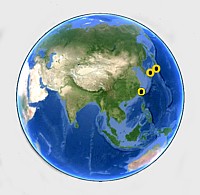
The first is “Obies Abroad: Views from Asia,” at 8 PM EDT on Friday, October 24, moderated by Tom Gold ‘70.
Four Oberlin graduates will share their experiences at Oberlin that supported their choice to live abroad in Japan and Taiwan, what adjustments to new cultures they needed to make, what perspectives they gained, how they and others in their country view changes occurring now in the US, and of course questions posed (preferably in advance) by the audience.
The second program: “Obies Abroad: Views from Africa, Europe, Canada” will be on Saturday afternoon, November 8, at 2 PM EST (save the date). There will be a separate registration and link.
Here are the bios for the October 24 speakers.
Ann Cary, (’72, Religion), Hiroshima, Japan
I was born and raised in Kyoto, Japan. After Oberlin, I returned to Japan where I decided I must learn and practice speaking Japanese like an adult/professional; free-lance work interpreting and translating (Japanese-English). I returned to Boston area for a master's at BU's School of Education. I married and returned with my husband to Japan where life took us to Osaka, Hokkaido, Ehime, Tokyo, and now Hiroshima. From 1989 to 2025, I taught at the college level: English language, basic interpreting skills and also planned and implemented overseas study programs. We have two daughters, one in Toronto, the other in Shizuoka, Japan; four grandchildren.
Randall L. Nadeau ???, Ph.D., (’74, BA Religion and Philosophy) Taipei, Taiwan
Randall is the Executive Director of the Foundation for Scholarly Exchange (Fulbright Taiwan), effective August 1, 2019. Professor Nadeau enjoyed an academic career as a Distinguished Professor of Religion at Trinity University spanning twenty-five years. He is the author of several books and articles on Asian religions, including research on religion in late imperial China, religious life in modern Taiwan, definitions of “religion” and religious concepts in East Asian traditions, and religion and identity. He has taught courses on Cultural Perspectives on Asian Religions, Buddhist Ethics, Japanese Literature of the Spirit World, Approaches to the Study of Religion, Personal Identity in Historical Perspective (a course on the history and society of Taiwan), Being Young in Asia, and Happiness. Dr. Nadeau was a Fulbright scholar hosted by the International College at Tunghai University (Taiwan, 2014-2015) and a faculty development consultant at Rikkyo University (Japan, 2018-2019). He has participated in faculty-led study abroad programs in Taiwan, Japan, Hong Kong, and China. He is devoted to international education, inter-cultural exchange, and multi-disciplinary research. A passionate believer in Fulbright’s values of internationalization, diversity, free inquiry, generosity and service, Dr. Nadeau has overseen a period of unprecedented growth in the Fulbright Program in Taiwan, with over 400 American and Taiwanese grantees per year.
David Wank, (’80, double major in History and East Asian Studies/Chinese Language and Literature), Tokyo, Japan
David served as a Shanxi representative in China from 1980 to 1982. He then earned his PhD in sociology from Harvard University in 1993 and taught at Sophia University in Tokyo until retiring in 2023. He now holds a research position at the Oriental Library in Tokyo, where he pursues research on society, politics, and Buddhism in China, Japan, and globally.
Recent Books: Metamorphosis of Buddhism in China's New Era: Between State, Culture, and Religion, coedited, Bloomsbury 2025; The Space of Religion: Temple, State, and Buddhist Communities in Modern China, coauthored, Columbia UP 2023 (Finalist, Award for Excellence in the Study of Religion in Analytical-Descriptive Studies, American Academy of Religion; Honorable Mention, Francis L.K. Hsu Book Prize, Society for East Asian Anthropology), The Global Japanese Restaurant: Mobilities, Imaginaries, and Politics, coedited, Hawaii UP 2023 (Best Book Prize, Association for Study of Food & Society)
Marcus Woo, (’79, Religion) Taipei, Taiwan
Marcus earned his J.D. from Indiana University Bloomington’s Maurer School of Law. Marcus also attended the Chinese Language School at Middlebury College and is bilingual in English and Chinese. Marcus started his legal career as an Assistant District Attorney in Queens, New York. He became an associate and later partner at Perkins Coie from 1993-2001 and then was a partner at Jones Day in its Beijing and Taipei offices from 2001-2010. Subsequently Marcus was Vice President & General Counsel of HTC Corporation, a global consumer electronics company, and oversaw HTC litigation and transactions and managed a legal team of more than 90 staff across the company responsible for corporate, M&A, litigation and licensing, and patent prosecution and management. He also oversaw global legal affairs for HTC Europe, HTC America and subsidiaries in China. During his career, Marcus has represented telecommunications, information technology and electronics, entertainment software, airlines and aerospace, and industrial and consumer product clients in intellectual property protection and management and technology licensing matters. In 2021 he returned as a partner at the international law firm Perkins Coie LLP in the firm’s Taipei office. In returning to Perkins Coie, Marcus has focused his practice on representing clients in Taiwan and beyond on intellectual property and corporate matters, including U.S. IP litigation work for Taiwanese companies.
Michael Barone ’68 has emailed some of us with the news that WOBC is relocating again, this time to a basement room in Peters Hall. See my article on the dis-displacement at https://www.t2buck.com/index.html
Also, the Message Forum on the Class of 1968’s reunion website has been active this month. See https://www.oberlincollege-con68.com/class_forum.cfm
Climate & Democracy -
Climate & Democracy
More…
The lack of authentic democracy in the U.S. has permitted corporate entities to pursue their own economic and political interests virtually unchecked. This includes plundering the earth and poisoning land, water and air, resulting in the climate crises. What inadequate regulations existed before the Trump regime are now being systemically eliminated.
.jpg) That’s the theme of Democracy in a Hotter Time, which Orr edited. This collection of essays calls for reforming democratic institutions as a prerequisite for avoiding climate chaos and adapting governance to how Earth works as a physical system. It proposes a new political order that will help humanity survive and thrive in the transition to a post–fossil fuel world.
That’s the theme of Democracy in a Hotter Time, which Orr edited. This collection of essays calls for reforming democratic institutions as a prerequisite for avoiding climate chaos and adapting governance to how Earth works as a physical system. It proposes a new political order that will help humanity survive and thrive in the transition to a post–fossil fuel world.
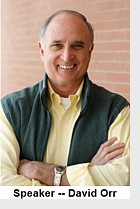 David Orr is the Emeritus Paul Sears Distinguished Professor of Environmental Studies and Politics at Oberlin College. He is the founder of The Oberlin Project, formed out of his vision of full-spectrum sustainability: an all-encompassing joint venture by the town and College to create a thriving, sustainable and environmentally friendly community in Oberlin.
Orr is the recipient of nine honorary degrees and other awards including The Millennium Leadership Award from Global Green, the Bioneers Award, the National Wildlife Federation Leadership Award, a Lyndhurst Prize acknowledging "persons of exceptional moral character, vision, and energy." He has been a scholar in residence at Ball State University, the University of Washington, and other universities. He has lectured at hundreds of colleges and universities throughout the U.S. and Europe. He has served as a Trustee for many organizations including the Rocky Mountain Institute, the Aldo Leopold Foundation, and the Bioneers. He has been a Trustee and/or advisor to ten foundations.
The program is sponsored by Move to Amend’s Ecology Network (Eco-Net), a space that Move to Amend created to focus on the relationship between corporate power and environmental catastrophe. We’re interested in gathering with folks who, like us, want an end to corporate destruction of the Earth for profit and to create alternatives for a truly livable world.

New Majors -
New Areas of Study
More…
On Wednesday, September 10th, at 7 pm EDT (6 pm CDT, 5 pm MDT, 4 pm PDT), you're invited to enjoy the enthusiasm these administrators and faculty members bring to Oberlin and their programs. All four of them look forward to a question and answer exchange. Register and save the date on your calendar!
SPEAKERS:
Dean Laura Baudot is the Senior Associate Dean of the College of Arts and Sciences, Associate Professor of English, and Director, StudiOC.
Dean Sally Takada, Associate Dean of the Conservatory and Artistic Programming and External Relations Director, will provide a high-level view of these innovations.
Victoria Bussert, Professor of Music Theater, will introduce us to the new Music Theater major.
Matthew Wright, Professor and Chair of Theater, will introduce the Bachelor of Arts/Bachelor of Fine Arts 5-year double major.
Bios for the four speakers are given below after the register button. Thank you.
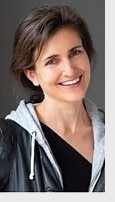 Laura Baudot (BA, Wellesley College, 1997, PhD, Princeton University, 2005) is Oberlin Associate Professor of English and Director, StudiOC. She chairs the Educational Plans and Policies Committee (EPPC). Her research and teaching interests center on 18th-century British literature and include history of science, 18th-century British art, and book history. Her interest in book history and 18th-century art has grown as a result of developing teaching strategies aimed at both broadening the appeal of 18th-century literary works and giving students a more vivid sense of historical context. In her course on the 18th-century British novel, she holds lab sessions in the library’s Special Collections. She is currently writing a book about how empirical, philosophical, and religious concepts of empty space and nothingness animate a tradition of 18th-century English literary experimentation with the printed book.
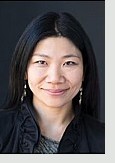 Sally Takada (BA, economics and music, Barnard College, MM, cello performance, New England Conservatory) is an accomplished cellist and has cultivated an extensive career in arts administration and fundraising in the higher education and arts sectors. She was a member of the advancement team for Oberlin College and Conservatory of Music from 2017 to 2022, most recently having served as Conservatory Giving Director. Sally also serves as executive director and co-founder of the Harpa International Music Academy USA along with her husband, violinist Sibbi Bernhardsson. Prior to her time at Oberlin, Sally held lead development posts at Music@Menlo Chamber Music Festival and Institute, University of Illinois School of Music, Indiana University Jacobs School of Music, and the WonderLab Museum of Science. She frequently serves as a presenter and facilitator of fundraising training sessions for non-profit organizations, conferences, and workshops.
 Victoria Bussert has directed more than 400 shows on prominent stages across three continents, including 38 seasons at Cleveland’s Great Lakes Theater and 17 at Idaho Shakespeare Festival, acting as resident director for the sister companies. Her national work includes productions at the Manhattan Theatre Club, York Theatre, Goodspeed Opera, Playhouse Square, Portland Stage, Dallas Theater Center, Repertory Theatre of St. Louis, Cincinnati Playhouse in the Park, and Anchorage Opera. Her international credits include Friar Tuck in Russia, The Who's Tommy in Brazil, the Danish premiere of Avenue Q (nominated for a 2012 Reumert Award), and the European premieres of Lizzie and [title of show] for Fredericia Teater in Denmark. Bussert made her London directorial debut with the critically acclaimed production of Lizzie. Recent directing projects include the regional premiere of Ride the Cyclone for Beck Center for the Arts, Ordinary Days for Playhouse Square, and Natasha, Pierre and the Great Comet of 1812 for Great Lakes Theater, which won the Cleveland Critics Award for Best Musical of the Year. She has long balanced her award-winning directing career with her role as an educator, serving as director of music theater at Baldwin Wallace University for 27 years. Her many accolades include a 2019 Cleveland Arts Prize for theater and dance, where the jury praised her directing and teaching. Music School Central named her one of the 10 Legendary Music Professors Teaching Today.
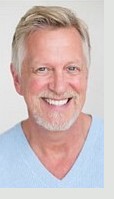 Matthew Wright (BA, University of Tennessee, Knoxville,1979; MFA, University of California, San Diego,1988) is a Professor of Theater and the Oberlin Chair of Theater. He is a professional actor and director whose work has taken him across the country. He’s worked at a roster of prestigious theaters including La Jolla Playhouse, Studio Arena in Buffalo, The McCarter Theatre, Cleveland Playhouse, Great Lakes Theatre, Cleveland Public Theatre, Dobama Theatre, The Clarence Brown Company, Trinity Rep, Florida Stage, Florida Studio Theatre, Actors Playhouse, The New Theater, and many others. The many artists with whom he’s collaborated include Anne Bogart, Tina Landau, Oskar Eustis, Zoe Caldwell, Olympia Dukakis, Frances Sternhagen, Polly Bergman and hundreds of fellow journeymen actors. He earned a MFA in acting at UC San Diego and has won a variety of awards including the Carbonnell Award for Best Actor and, recently, the Cleveland Critics Circle Award for Best Actor in A Musical. Proud member of Actors’ Equity since 1988.
Note: The presenters are happy to discuss their areas of responsibility and study. However, we expect them to tell us if any of our questions are best addressed by another administrator, such as President Ambar, College of Arts and Sciences Dean Kamitsuka, or Dean of the Conservatory Quillen. We will keep track of these questions and address them in future sessions or in communications to those who register for this meeting.
The Road to the Future Planning Group of Oberlin Classes 1967-1972
As noted, the comments were posted on Frank's "Classmate Profile" page at the website for the 2018 Class of 1968 reunion. That site is https://www.oberlincollege-con68.com.

After teaching the book of Genesis for over 30 years in synagogues, churches, and universities, I have published "Reading Genesis Again For The First Time-- A Radical Commentary" (Amazon, July 2024)., It's a very different, but objectively honest commentary: there is a reason there are two Creation stories, and neither one is meant to explain how the world was created; the serpent is not evil, it’s God's agent; Adam and Eve did not sin, in fact God needed them to eat the fruit to get them out of the garden; Cain did not murder his brother, and should be seen as a "tragic hero"; Isaac, far from being a "patriarch," is a weak and seriously damaged child-man; Esau is not the evil twin of Jacob, but a sympathetic character to be pitied; and the Joseph narrative is essentially a story about the rivalry between Reuven and Judah for leadership of the clan.
Zoom on Tariffs -
Tariffs: Theory. Practice. More…
What’s the “truth” about tariffs? What are tariffs and who pays? What does history tell us about their utility? Can tariffs be productive for a country or are they ruinous by nature? Are the Trump Administration’s tariff policies likely to invigorate domestic industrial product? What do these policies portend for the global economic system?
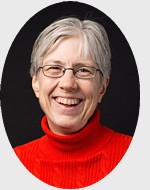 On Tuesday, June 17, at 6:00 PM ET, the Oberlin Club of Washington, D.C., will present a Zoom conversation on these questions with Susan Helper ’79. She was an economist in both the Obama and Biden administrations and is now the Frank Tracy Carlton Professor of Economics at the Weatherhead School of Management at Cleveland’s Case Western Reserve University.
Click REGISTER HERE to sign up for the Zoom session. You will then receive an email labelled Oberlin Alumni Association with your personal link to the program. If you wish to invite others, forward the whole email as each link is personalized.
Posted on: May 10, 2025 at 10:40 PM
Welcome to the website. Glad to read your comments
Earth Day Program 2025 -
Hello Attendees of our recent More…
Below is the link to the program. Due to a recording glitch, only the first three speakers were captured on the video. However, because we used closed captions and AI Summary, the AI summary at the end of the video description has the summary of all the presentations of the speakers, including the final three. We hope you enjoyed the program. We are planning additional programs, most likely beginning again in the fall 2025.
https://youtu.be/3B-65Ye2ONA?
Road to the Future Planning Committee,
Oberlin Alumni Classes -'67-'72
Attachments area
Preview YouTube video Oberlin City and College Collaboration for Achieving Carbon Neutrality

Oberlin City and College Collaboration for Achieving Carbon Neutrality
Carbon Neutrality Zoom -
This Tuesday: More…
At 7 PM Eastern Time on Earth Day (April 22), there will be an online Zoom program about
Oberlin City and College Collaboration for Achieving Carbon Neutrality
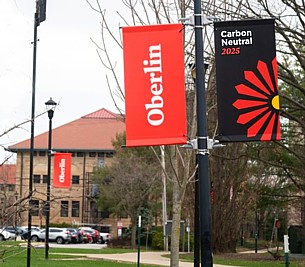
Join us for the fascinating story of how their collaboration starting in 2000 was able to achieve Carbon Neutrality by 2025. How did they do it? With solar panels, geothermal, dashboard energy monitoring, educational modules, home energy upgrades, school and community activities, and intensive collaborative planning. The speakers will be
John Petersen '88, Oberlin faculty and systems ecologist
Linda Arbogast, City of Oberlin Sustainability Coordinator
Gregory Jones, Energy Advocate for POWER (Providing Oberlin with Efficiency Responsibly)
Sami Singleton '25, OC senior and Environmental Studies Major with a path in urban design
Josette Apple '25, OC senior and Environmental Studies Major specializing in communications & media
Chris Norman, Oberlin faculty and Senior Director for Energy and Sustainability.
And the moderator will be Walt Galloway '69, the current Chair of the Oberlin College EnviroAlums. The organizers include Paul Safyan ’68, Dave Tempest ’72, and Susan Buck ’72. After brief introductions, the speakers will open the program for interactive questions.
This program is part of the “Road to the Future” series sponsored by the Oberlin Alumni Classes ‘67 to ‘72. Click here for detailed biographies of the participants, or click here for links to additional background resources on Oberlin environmental sustainability.
Click REGISTER HERE to sign up for the Zoom session. You will then receive an email labelled Oberlin Alumni Association with your personal link to the program. If you wish to invite others, forward the whole email as each link is personalized.